It's hard to believe that 2026 is already approaching the halfway point. We've had an incredibly busy year-to-date and are long overdue to provide some substantial updates on the projects we're coordinating, leading, and developing.
Domestic Phosphorus Management Planning
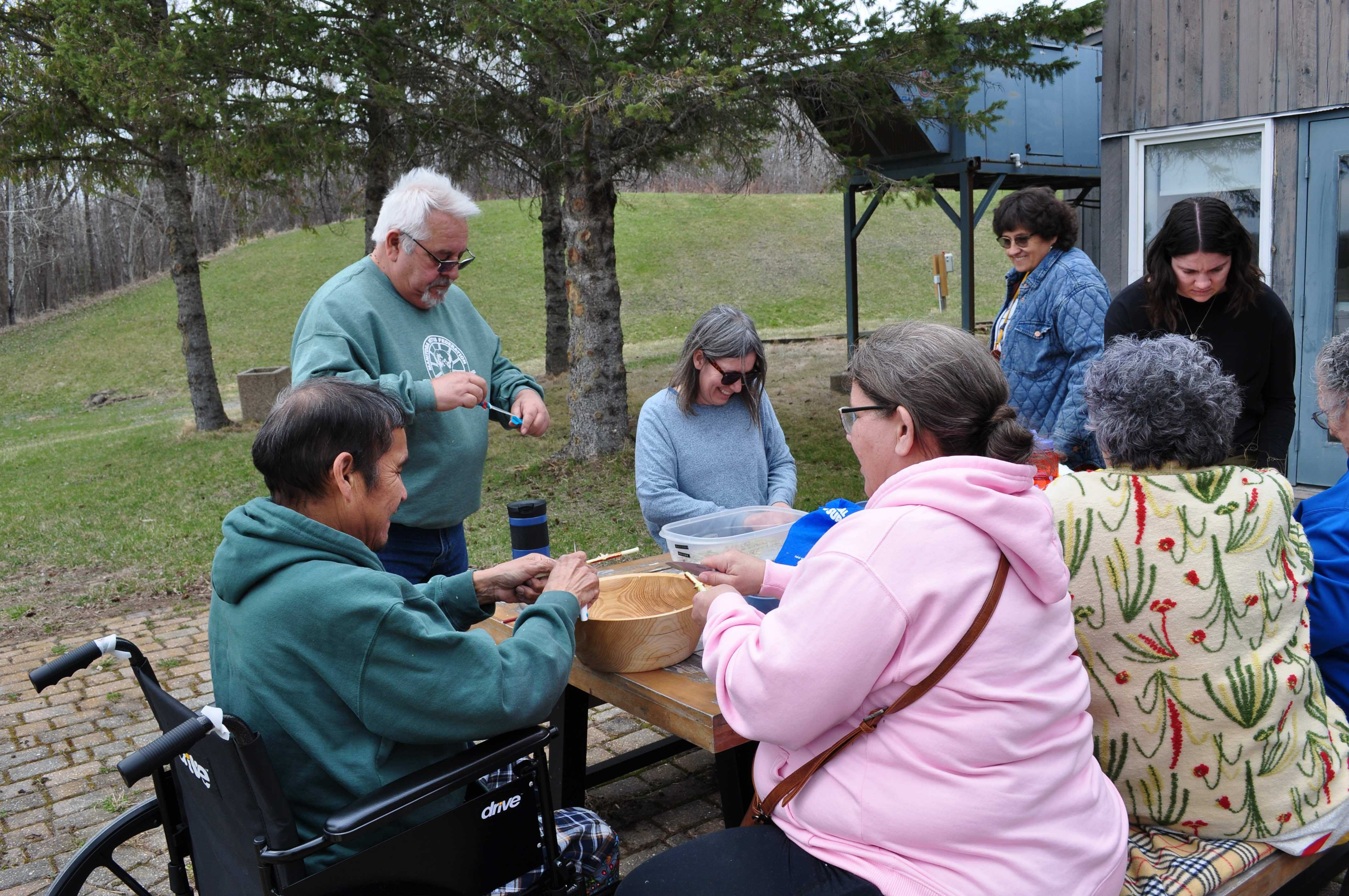 Participants to our Manitou Mounds PMP workshop helped with preparing ceremonial bundles for the spring water ceremonies in area First Nations.Our flagship project, led by Meg Mills and funded through the Canada Water Agency's Lake of the Woods Freshwater Ecosystem Initiative, is our work to develop a collaborative, community-informed phosphorus management plan for Canadian portions of the Rainy-Lake of the Woods watershed. This three-year project is now in its final year. Meg continues to work with experts, advisors, academics, scientists, agency personnel, and community knowledge holders across a wide array of sectors including agriculture, mining, forestry, land use and development, and wastewater management to better understand and address nutrient pollution sources.
In May, Meg, with help from our Communications Specialist, Julianna Wanke, hosted a full day workshop with Indigenous elders at Kay-Nah-Che-Wah-Nung (Manitou Mounds) on Rainy River. There, participants learned about the project, discussed concerns and proposed solutions. We were guided through making bundles for water ceremonies, and in the communal setting, we were able to properly listen, learn, and form new relationships.
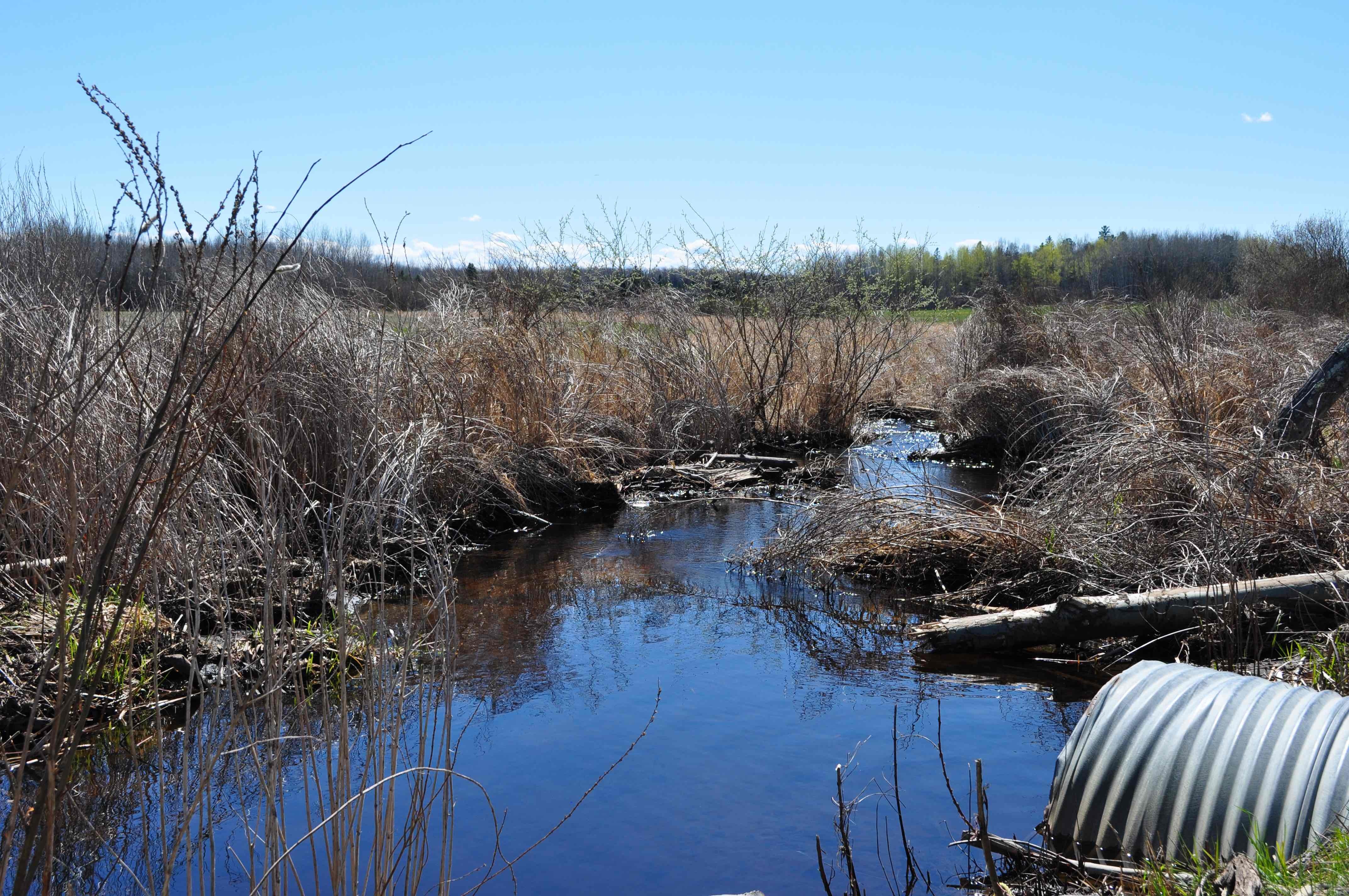 Wetlands in the lower Rainy River district, which all flow through to Lake of the Woods, are important natural nutrient filters.Later in the month, we had an opportunity to address the Rainy River District Municipal Association and to visit middle school children at Pegamigaabo School at Big Grassy First Nation. In both cases, we answered many questions about regional water quality and heard from local people about their concerns for water sustainability in the long-term.
International Joint Commission Activities
LOWWSF participates in the International Rainy-Lake of the Woods Watershed Board, with our Executive Director, Teika Newton, serving as a public board member and the Canadian co-chair for the Aquatic Ecosystem Health Committee, while International Watershed Coordinator Meg Mills, supports the IRLWWB’s projects, activities and committees.
Each year, the AEHC produces an annual report for the IJC on exceedances to water quality alerts, objectives, and government-issued regulatory permits for facilities that discharge wastewater into the shared international waters of Rainy River and Lake of the Woods. Phosphorus is the primary nutrient driving algae blooms, and in addition to being part of sewage effluents, it also comes from many landscape sources - stuck to sediments that erode from streambanks, in pollen, ash, and other organic matter, from fertilizer runoff and it's also found in lakebottom sediments that hold the legacy of pollution from past decades. In 2024, permitted facilities were compliant with their discharge permits for phosphorus, but we saw phosphorus exceedances in Lake of the Woods, as we do every year. The AEHC also reported on exceedances related to mercury in fish tissue for all the Canada – U.S. boundary waters in our watershed. The committee is currently compiling and analyzing 2025 data to prepare this year's exceedance report which will likely be published later in the fall.
The AEHC is currently engaged in several projects, including the second phase of a study of the causes and consequences of erosion of the barrier islands (Pine, Curry, Sable Islands) at the mouth of the Rainy River at Lake of the Woods. In this phase, we are looking at possible remediation measures that could protect the south shore of Lake of the Woods from erosion that results when these protective sandbar islands degrade. The AEHC is also starting a second phase of a study to investigate potential areas of vulnerability to mining across the watershed. This study will be conducted by experts at the US Geological Survey over the coming year. Meanwhile, earlier this year, the watershed board signed off on a recently completed study sponsored by the AEHC that examined how agencies, communities and other interested parties respond to environmental emergencies, and made recommendations for improvements in coordination of these responses.
At present, we are gearing up for summer meetings in the basin, with all six IJC Commissioners planning to attend board meetings in August in Fort Frances and Kenora.
Developing a Watershed Monitoring Program
LOWWSF convenes the International Multi-Agency Arrangement (IMA), a roundtable where resource agencies meet, share information, collaborate and cooperate on projects and activities to meet shared, international water resource management goals. Additionally, our participation in the IJC watershed board and through the AEHC means our organization is uniquely positioned to regularly meet with resource agency personnel who do routine and episodic water quality studies throughout the watershed have. In the past couple of years, we have been discussing with agency and watershed governance colleagues the need to build regional capacity for watershed monitoring, and now we are helping to coordinate the development and deployment of this very ambitious project.
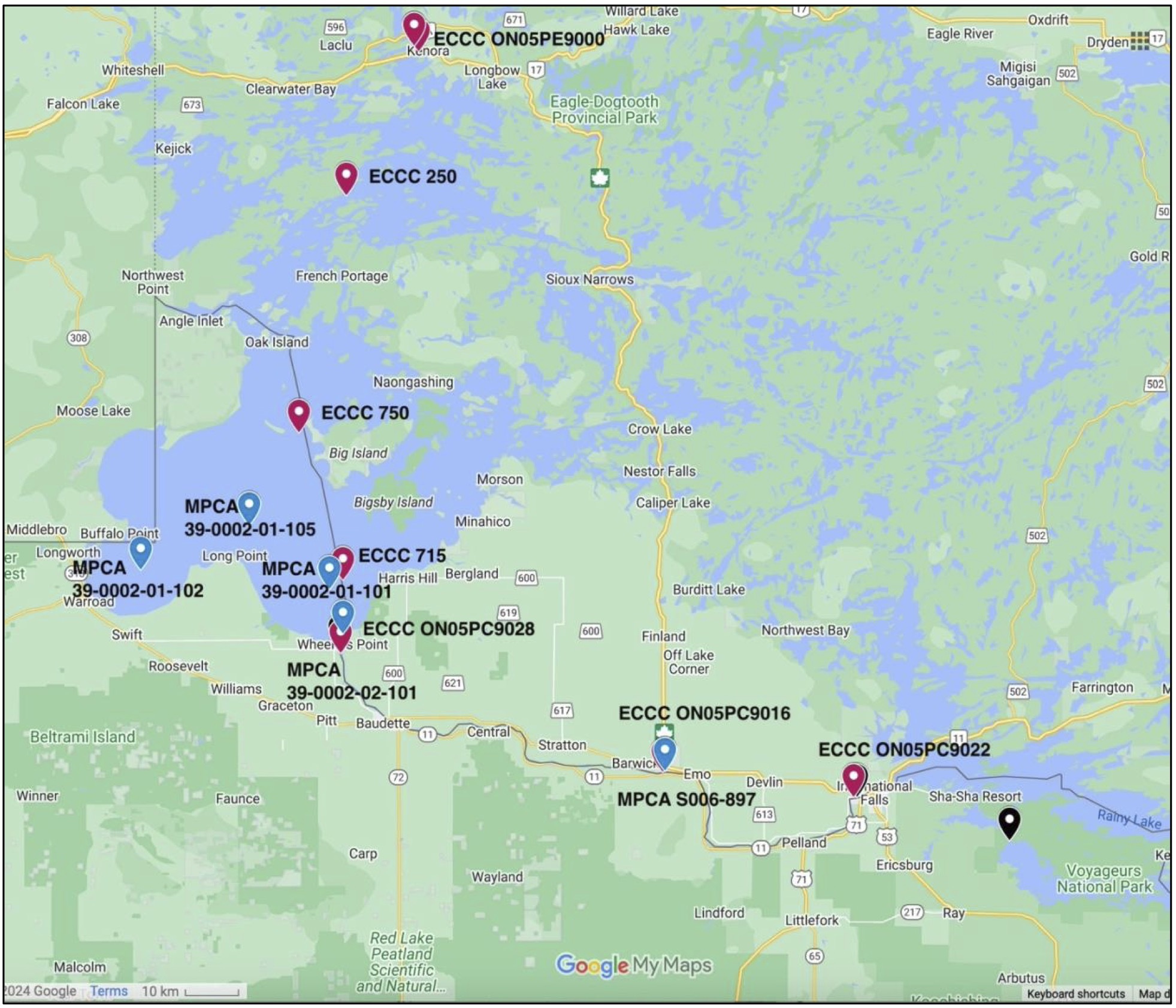 In recent years, LOWWSF coordinated agency partners in developing an initial monitoring network to provide data used in annual water quality reporting through by the IJC. Here, blue pins represent US (MPCA) collection sites and red pins are Canadian (ECCC) sites. We are now working to extend monitoring across more of the watershed, covering more parameters, more frequently. This year, through the AEHC in cooperation with the IMA, work is proceeding to develop a collaborative, multi-jurisdictional watershed monitoring program that will bring together data collected by government agencies at all levels in both Canada and the United States, alongside citizen science and community-based monitoring programs run by Indigenous communities and others. The watershed monitoring program will aid in establishing baseline data across the entire watershed, with periodic surveys to assess changes over time. It will also provide the data necessary to fully inform the IRLWWB's annual water quality exceedance report, and to identify any emerging water quality concerns or vulnerabilities.
This task is COMPLICATED and LOWWSF's role is to keep all the players in the game, working together, identifying and addressing capacity gaps, and delivering a cost-effective, sustainable program that works for all involved. Not only are we working with dozens of agencies and personnel, but the work requires contributions and cooperation among all levels of government, internationally, which also means we sometimes also have a role to play as diplomats and advocates to governments.
Participants to the watershed monitoring program we, collectively, are designing are not formally committed to any binding international or interagency pledges, promises or programs, but rather everyone involved cares deeply for the well-being of our watershed and are eager to stretch limited dollars as far as possible by cooperating, collaborating, and minimizing unnecessary duplication of efforts. The dozen or so groups currently engaged in water quality monitoring continue to creatively find ways, wherever possible, to support one another's agencies and regions in learning new techniques, accessing gear from boats to water sampling tools, training community water sample collectors, and more.
Meanwhile watershed data collection, interpretation and management is not just a conversation in Rainy-Lake of the Woods. It is also a hot topic in policy circles and among watershed organizations across Canada. In April, the Government of Canada published A Force of Nature, a $3.8B investment to 2030 to protect nature. The strategy frames nature protection within an economic lens, noting, “Nature underpins much of our economic prosperity and climate action.” Further, “Harnessing data, mapping, and artificial intelligence (AI) will help us to identify Key Biodiversity Areas and will accelerate permitting, by giving investors and project proponents better data to strengthen decision-making.” Meanwhile, the Canada Water Agency has been tasked with developing a Canadian Water Security Strategy. Details for this project are being refined, though we anticipate this work will draw on experiences from international, transboundary watersheds such as ours.
Conferencing!
And finally, the other activity that has been a priority focus for the LOWWSF team this spring has been our participation in several technical and policy gatherings across the country.
Participating in professional conferences provides invaluable opportunity to meet with peers, discuss and resolve technical challenges in our work, seek new partnerships and collaborations (both financial and technical), and learn to view our work from fresh perspectives. Conferences can also demand heavy commitments of time and resources, so we choose our engagements very judiciously! The spate of events in which we are participating in 2026 marks the first time in more than five years that we have participated in such events outside our own watershed.
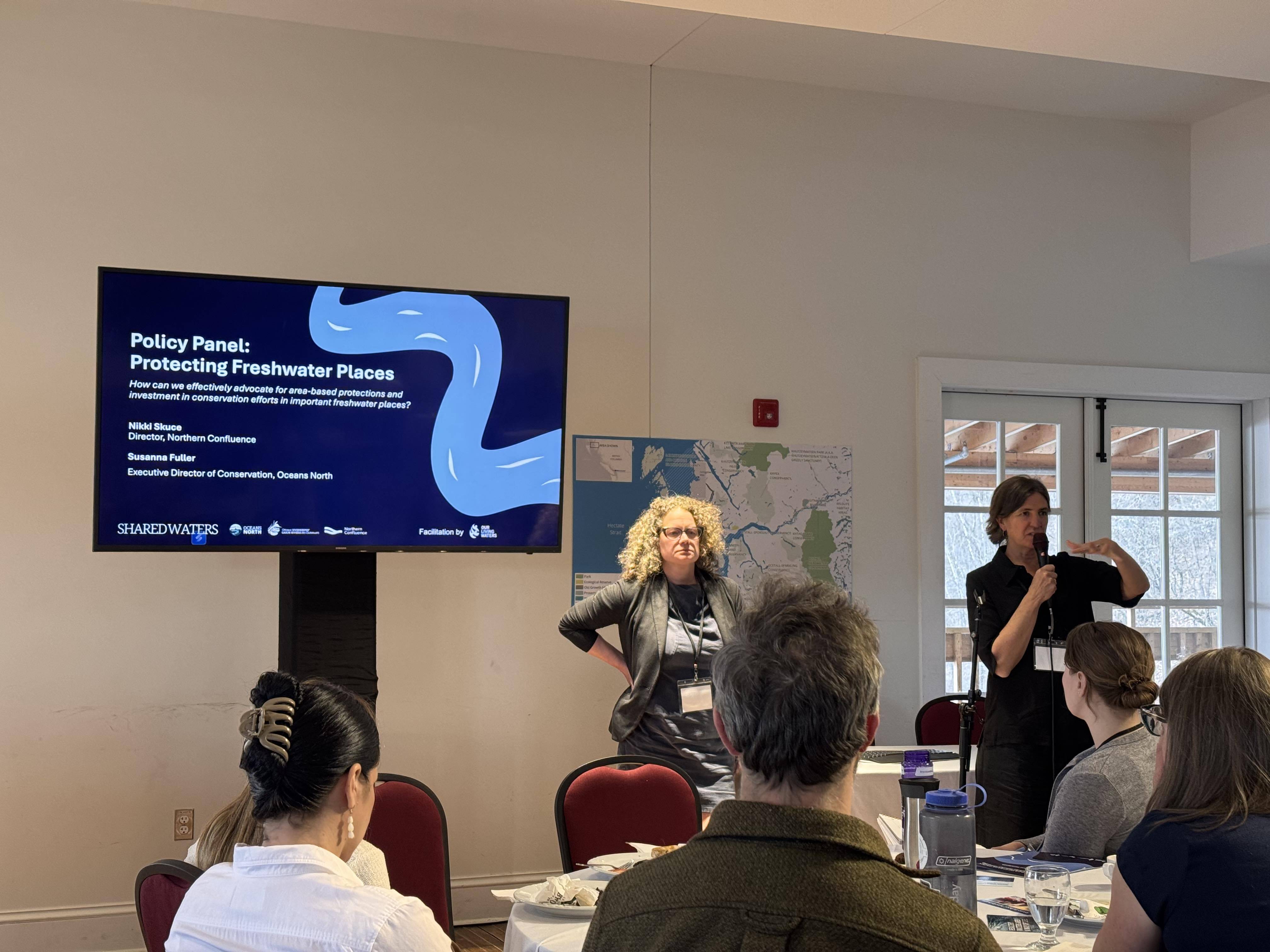 The Shared Waters gathering hosts Susanna Fuller of Oceans North (left) and Nikki Skuce of Northern Confluence (right).In April, LOWWSF participated in Shared Waters, a national gathering of watershed organizations and federal agencies, hosted in Ottawa by Oceans North, Ottawa Riverkeeper and Northern Confluence, and facilitated by Our Living Waters, four of the country’s leading water resources environmental organizations. Around 30 organizations participated in an exhaustive one-day workshop aimed at identifying policy recommendations, both to expand the list of federally recognized Environmentally Sensitive Areas under the Fisheries Act - Lake of the Woods is not yet on the list for consideration, but we are exploring the concept to better understand its advantages and limitations. At the gathering, we discussed policy to inform the new f
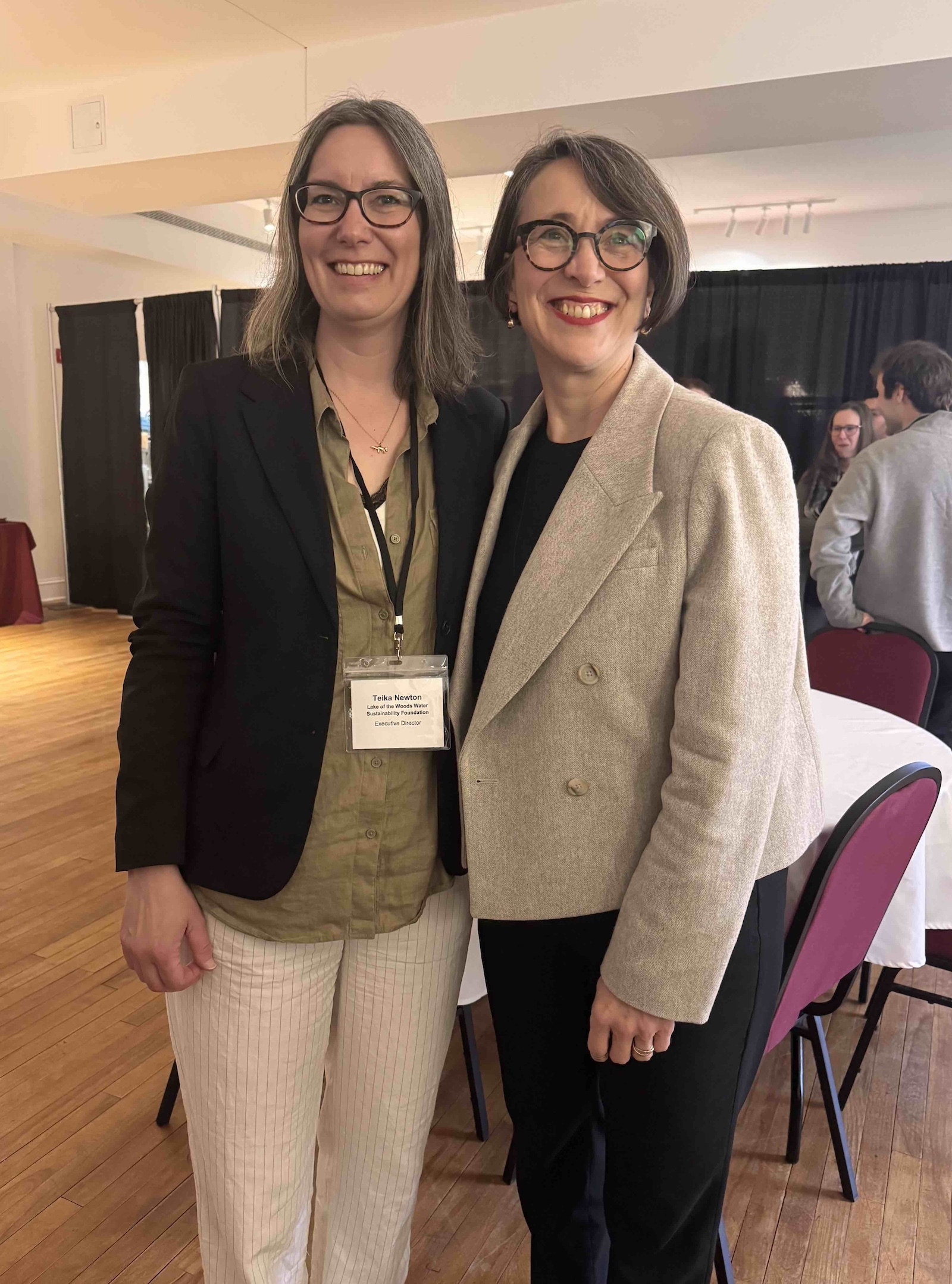 LOWWSF ED Teika Newton (left) with Canadian Secretary of State for Nature, Hon. Nathalie Provost (right) at the Shared Waters gathering.ederal nature strategy and Canadian water security strategy. LOWWSF made many contributions to the set of recommendations around data management needs and gaps, including sharing some of our own best practices that have enabled impressively efficient international, interagency cooperation in this watershed.
In May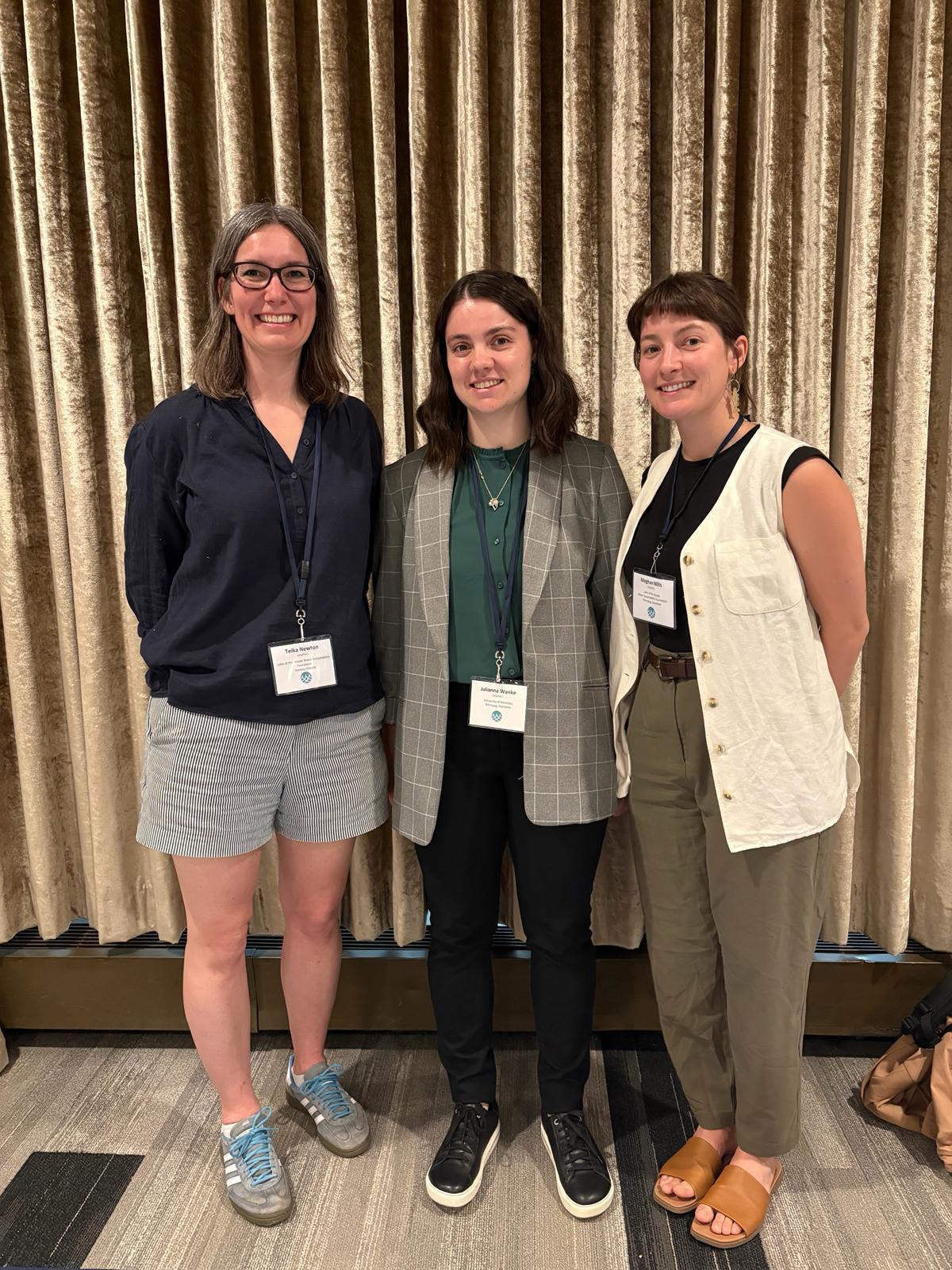 Teika, Julianna and Meg at IAGLR in Winnipeg, May 29, 2026., our whole team participated in the week-long Connected Waters: Bridging Communities and Ideas, the four-day annual joint conference of the International Association for Great Lakes Research and the Society of Canadian Aquatic Sciences in Winnipeg, MB. Co-hosted by our friends at IISD-Experimental Lakes Area, this was a massive conference with many thousands of participants from around the world. Teika had the opportunity to present on our convening work through the International Multi-Agency Arrangement, while Julianna presented her graduate thesis work, through IISD-ELA, on wild rice productivity. Meg networked with our many IJC, agency, and academic colleagues, engaging in valuable side conversations about phosphorus management and many other topics that fill our workdays.
Next up, Meg will be participating in the Canadian Water Resources Association's conference in Winnipeg in mid-June, and later this year she's eyeing the North American Lake Management Association's gathering in Kelowna, BC, as we have long been contributors in that professional space, too.